Marketing automation has a reputation problem — and it earned it.
For every team using automation to deliver genuinely relevant, timely, personalized experiences, there are ten teams using it to send the same generic nurture sequence to everyone who ever downloaded a white paper in 2021. For every smart, signal-driven workflow, there are a hundred "drip campaigns" that drip nothing but noise.
The technology isn't the problem. The strategy behind the technology is the problem.
Here's how to build marketing automation that actually works — that creates real engagement, real pipeline, and real revenue, not just impressive send volume on a dashboard.
The default approach to marketing automation is to take a manual process and make it run automatically. Send a welcome email — automate it. Follow up after a demo — automate it. Send a monthly newsletter — automate it.
This isn't wrong. But it's incomplete. And when it becomes the entire automation strategy, you end up with a system that replicates the same mediocre experience at scale.
The better question isn't *what manual processes can we automate?* It's *what experiences can we create that wouldn't be possible without automation?*
That's a fundamentally different starting point — and it leads to fundamentally different outcomes.
The Three Types of Automation (Only One of Them Actually Works)
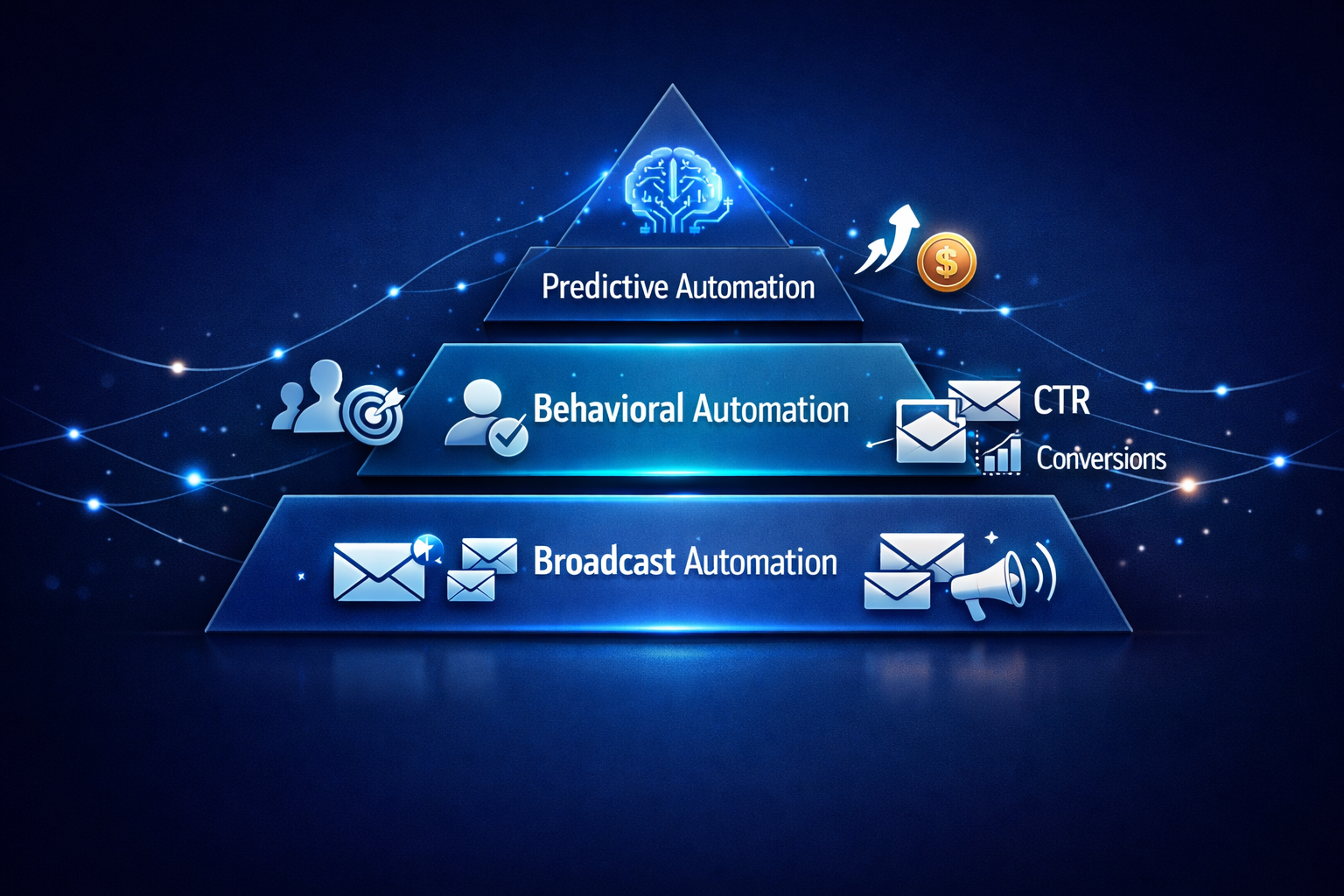
Type 1: Broadcast Automation
This is the most common form. Send X to everyone in segment Y on day Z. Newsletters, product announcements, monthly check-ins. It's better than doing it manually, but it's the lowest form of automation value.
Broadcast automation delivers your message. It doesn't tailor it to the individual, the moment, or the context. It's useful — but don't confuse it with sophistication.
Type 2: Behavioral Automation
This is where most teams should be spending their energy. Behavioral automation responds to what a contact *does* — not who they are on paper.
Visited the pricing page twice in a week? Trigger a personalized outreach. Downloaded your implementation guide? Shift them from top-funnel nurture to bottom-funnel content. Went dark after a product demo? Launch a re-engagement sequence calibrated to where they stalled.
Behavioral automation is relevant because it's reactive. It meets buyers where they are, not where you assumed they'd be.
Type 3: Predictive Automation
This is the frontier — and it requires AI to do properly. Predictive automation doesn't just react to what someone did. It anticipates what they're likely to do next and acts preemptively.
Propensity-to-convert models. Churn prediction triggers. Expansion opportunity signals. This is automation that creates competitive advantage, not just operational efficiency.
Most teams aren't here yet. The ones that are building toward it now will have a structural advantage in 18-24 months.
What Good Behavioral Automation Looks Like in Practice
Let me make this concrete. Here's a real behavioral automation framework for a B2B SaaS company:
Stage: Awareness → Consideration
- Trigger: Contact reads 3+ blog posts in a 7-day window
- Action: Add to "engaged audience" segment; begin sending weekly thought leadership content; suppress from sales outreach for 14 days
- Logic: This person is researching, not buying. Don't interrupt with a demo request. Earn their trust first.
Stage: Consideration → Intent
- Trigger: Contact visits pricing page OR watches full product demo video
- Action: Alert the assigned SDR with contact context; send a "ready to explore more?" email with a light CTA; add to high-priority sequence
- Logic: This is an intent signal. Sales should know. Automation should support — not replace — the human outreach.
Stage: Intent → Decision
- Trigger: Contact requests a demo OR responds to outreach
- Action: Suppress from all automated nurture; hand off entirely to sales; begin post-demo follow-up sequence based on outcome of first meeting
- Logic: Once the human relationship is live, automation should step back — not send them a "just checking in!" email three days after a sales call.
Stage: Closed Lost → Re-engagement
- Trigger: 90 days post-close-lost; no activity in CRM
- Action: Re-enter a low-frequency nurture track focused on category education — not product pitching; monitor for re-engagement signals
- Logic: The timing wasn't right. Keep the relationship warm without being pushy. Let them come back when they're ready.
The Content Trap: Automation Only Works if What You're Sending Is Worth Receiving
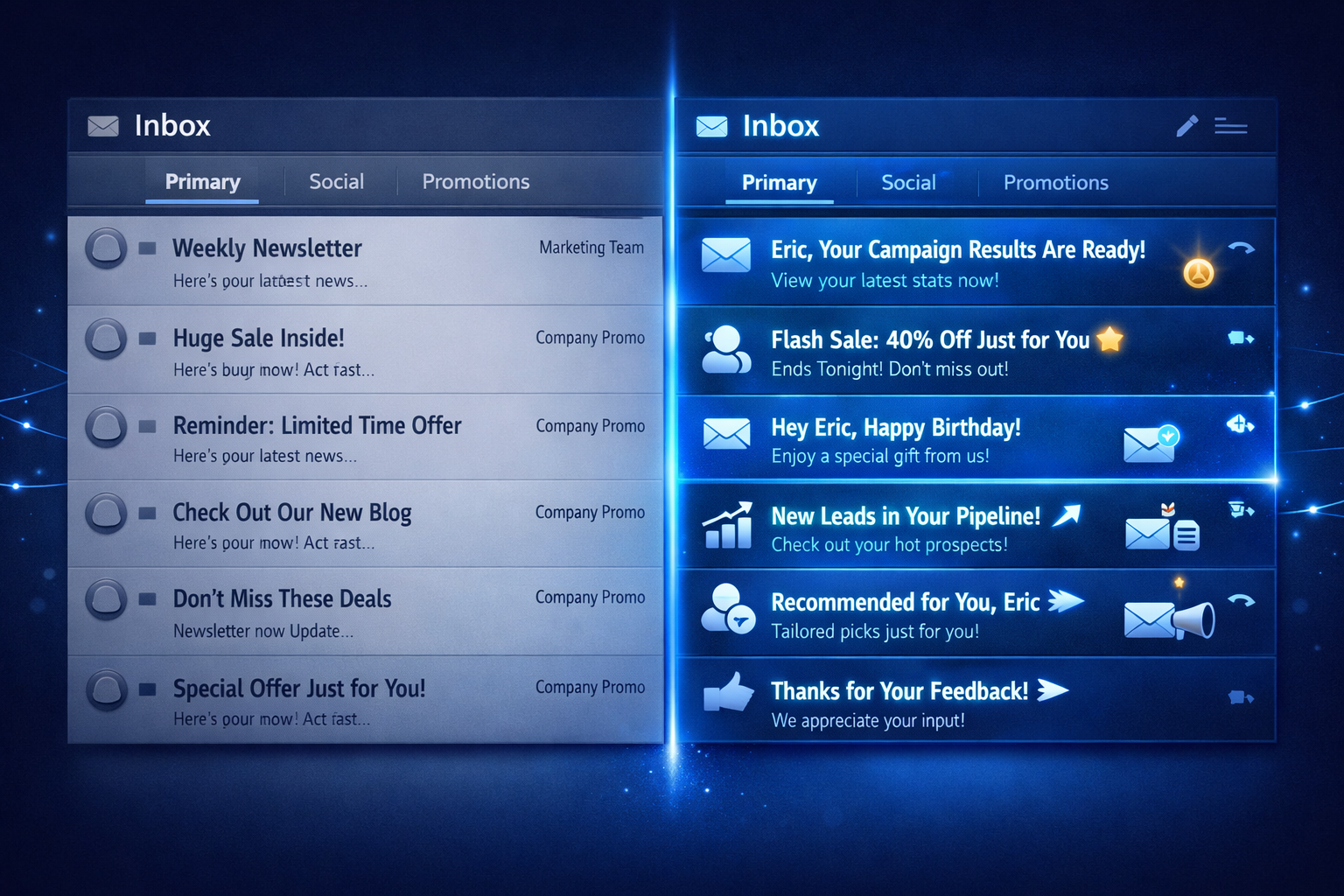
Here's the inconvenient truth: no amount of sophisticated automation can save bad content.
If your nurture emails are generic, your triggered messages are templated, and your "personalization" is just a first-name merge tag — automation will just make sure your irrelevant content reaches people faster.
Before you build another workflow, audit what's inside it. Ask: *If I received this email, would I read it? Would I click it? Would I be glad it arrived in my inbox?*
If the answer is no, the automation isn't the problem. The content is.
Build content worth sending first. Then build the system that delivers it at the right time to the right person.
The Suppression Strategy Nobody Talks About
One of the most impactful things you can do to improve your automation performance isn't to send more — it's to send less.
Build aggressive suppression logic into every workflow:
- Suppress contacts who've been emailed more than N times in the last 30 days
- Suppress contacts currently in active sales conversations
- Suppress contacts who haven't opened the last 5 emails in the sequence
- Suppress contacts who have already converted on the goal of the automation
Suppression protects your sender reputation, reduces unsubscribes, and ensures your messages only reach people likely to find them valuable. Suppression is not the enemy of reach. It's the guardian of relevance.
Measuring Automation Performance: The Right Metrics
Don't measure your automation by email volume. Measure it by the outcomes it creates.
Engagement metrics:
- Open rate and click rate by workflow and stage (not total)
- Reply rate on triggered outreach
- Sequence completion rate — how many contacts make it through the full workflow?
Pipeline metrics:
- Influenced pipeline from automated nurture — not just "touched by automation"
- Meeting rate from automated triggers vs. manual outreach
- Velocity improvement — do contacts in automated tracks move through stages faster?
Health metrics:
- Unsubscribe rate by workflow (high unsubscribes = relevance problem)
- Spam complaint rate (existential threat to your domain)
- Database decay rate — how fast is your contact list degrading in quality?
The Bottom Line
Marketing automation that actually works is not about sending more. It's about sending right — the right message, to the right person, at the right moment, triggered by the right signal.
Stop automating noise. Start automating value. Build behavioral workflows that respond to buyers, not workflows that talk at them. And always, always make sure the content inside the automation is worth someone's time to read.
The technology is a multiplier. Make sure what you're multiplying is worth it.