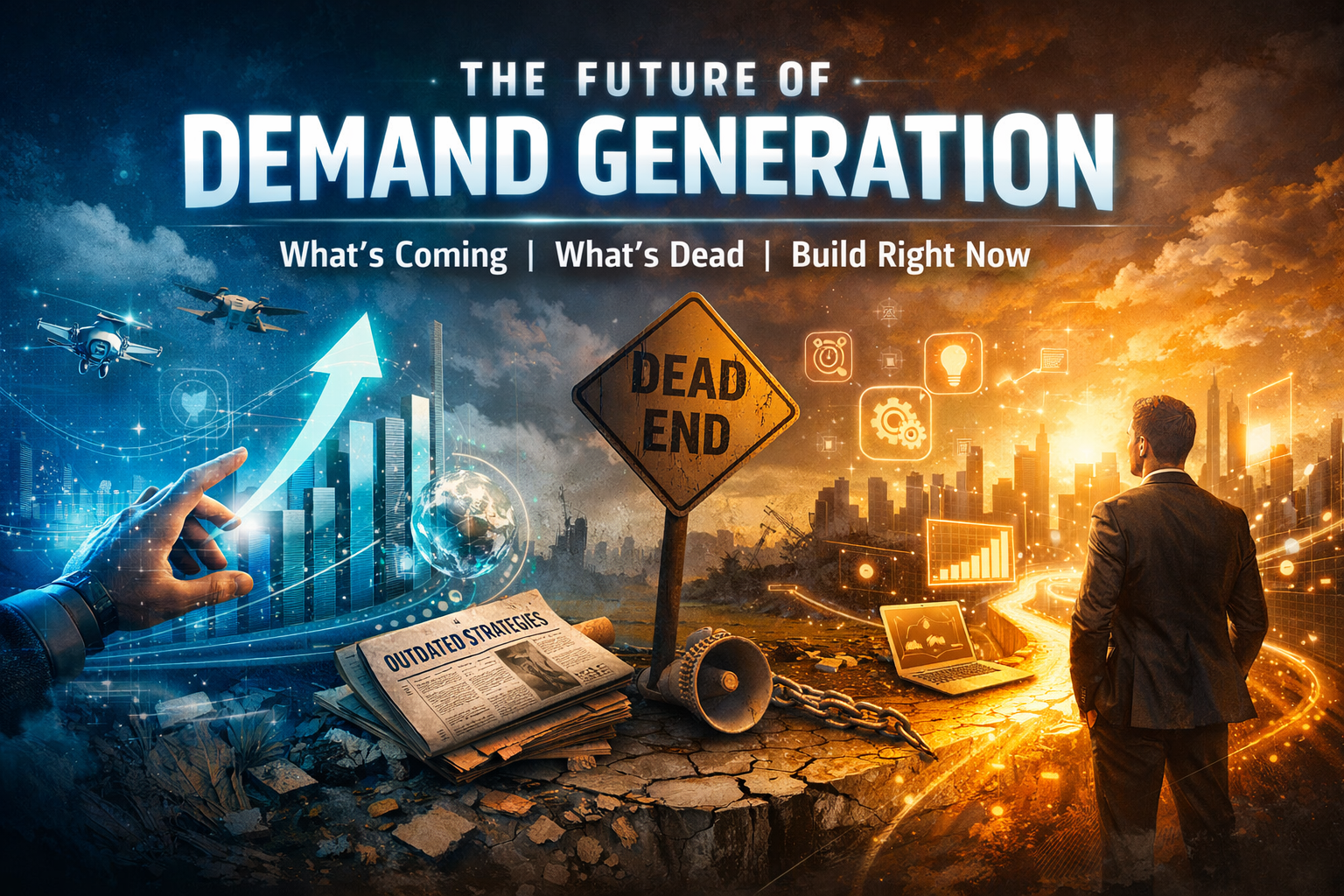
Demand generation is having an identity crisis.
The channel mix that worked in 2020 is half as effective in 2026. The buyer who used to respond to a cold email sequence now ignores it completely. The webinar that used to pull hundreds of registrants barely hits double digits. And the attribution model your CMO approved three years ago is measuring things that no longer reflect how anyone actually buys.
But here's what I want to push back on: the death of tactics is not the death of demand generation. Demand generation as a discipline — the systematic creation of awareness, interest, and urgency in your ideal buyers — has never been more important. It's the *methods* that need to evolve.
Let me show you what's changing, what's over, and what you should be building right now.
What's Dead (or Dying Fast)
High-Frequency, Low-Personalization Outbound
The spray-and-pray era of outbound is finished. Not because email is dead — email is still one of the highest-ROI channels available. But because buyers have finally gotten good at ignoring templated sequences that feel like they were written by someone who has never read their LinkedIn profile.
If your outbound motion is built on volume rather than precision, you're buying declining returns on an expiring asset. The response rates will keep dropping until the math stops working, and for many teams, it already has.
Gated Content as a Demand Driver
Gating a PDF behind a form and calling it demand generation is a relic of a different era. Buyers don't want to trade their contact information for a mediocre ebook they'll never read. They want to access the actual insight — freely, immediately — and make their own decision about whether to engage further.
The brands winning attention right now are giving away their best thinking without a gate. They're building trust before they build pipeline.
Vanity Event Attendance
The "field event" that's really just a dinner to get logos in a room has a rapidly declining ROI. Buyers are more selective about their time than ever. If you're investing heavily in events without a clear, measurable connection to pipeline acceleration, you're spending on brand theater, not demand creation.
What's Working Now (and Will Keep Working)
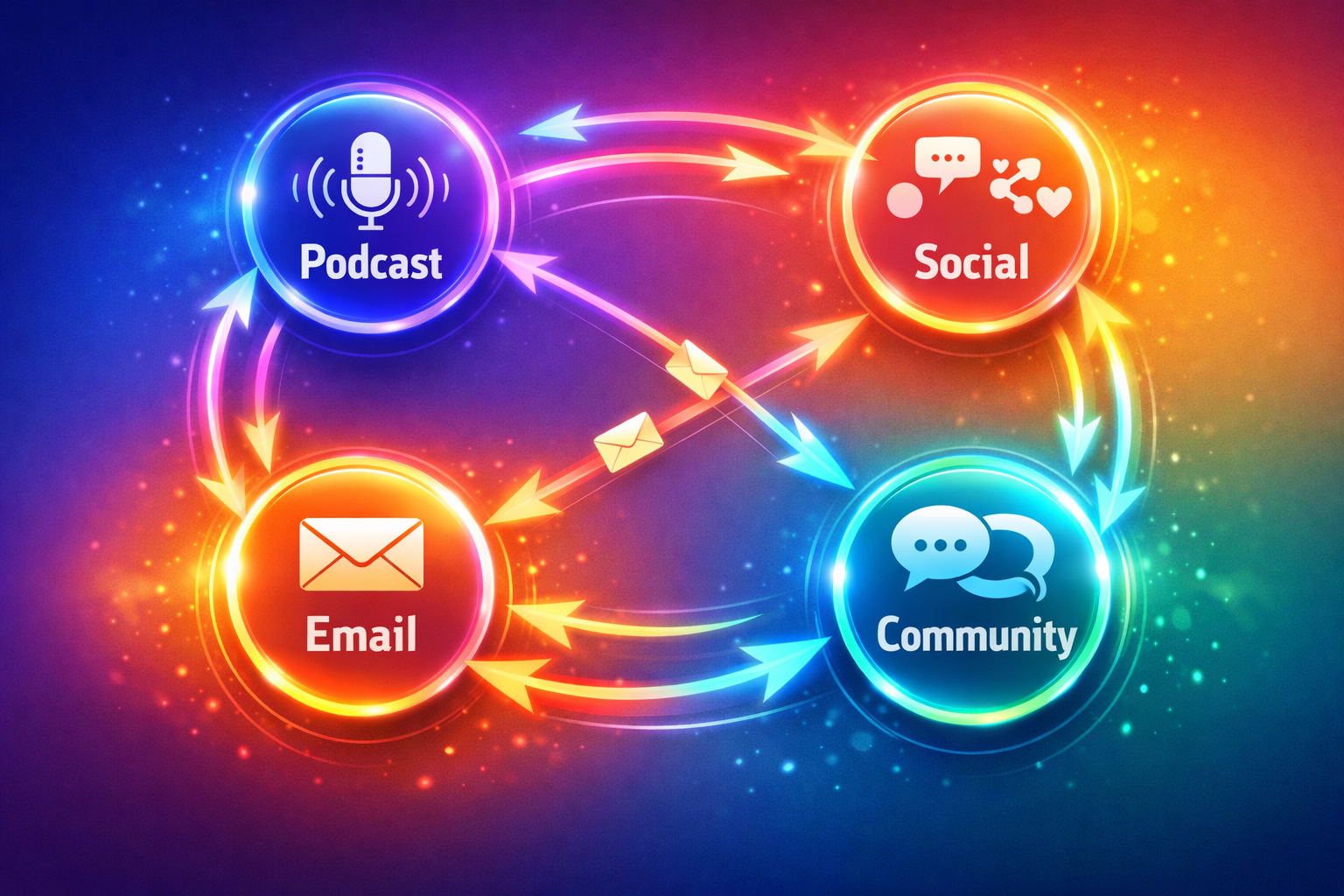
Dark Social and Community-Led Demand
The buyer's journey is happening in places you can't track. Slack communities. LinkedIn DMs. Reddit threads. Private group chats. "Dark social" — the sharing and conversation that happens in untrackable channels — is where a massive portion of B2B buying decisions are being influenced.
You can't measure dark social directly. But you can participate in it. The brands showing up authentically in the communities where their buyers live — not just pushing content, but actually contributing — are building demand before buyers even know they're in-market.
Thought Leadership That Actually Leads
There's a difference between thought leadership and thought "me too." Actual thought leadership takes a position. It says something that some people will disagree with. It offers a perspective that the market hasn't heard before.
The generic "here are five tips" article is not thought leadership. It's content. Content creates impressions. Thought leadership creates conviction. And conviction is what drives a buyer to pick up the phone.
The demand generation teams making noise right now are building POVs, not just content calendars.
Signal-Based Outreach
I already covered this in the AI playbook post, but it deserves a mention here: outbound that's triggered by genuine buying signals is outperforming spray-and-pray by a significant margin.
When your outreach is relevant — when it arrives at the moment a buyer is actively researching your category — it doesn't feel like interruption. It feels like timing. And timing, more than message, is what determines whether an outreach lands.
What You Should Be Building Right Now
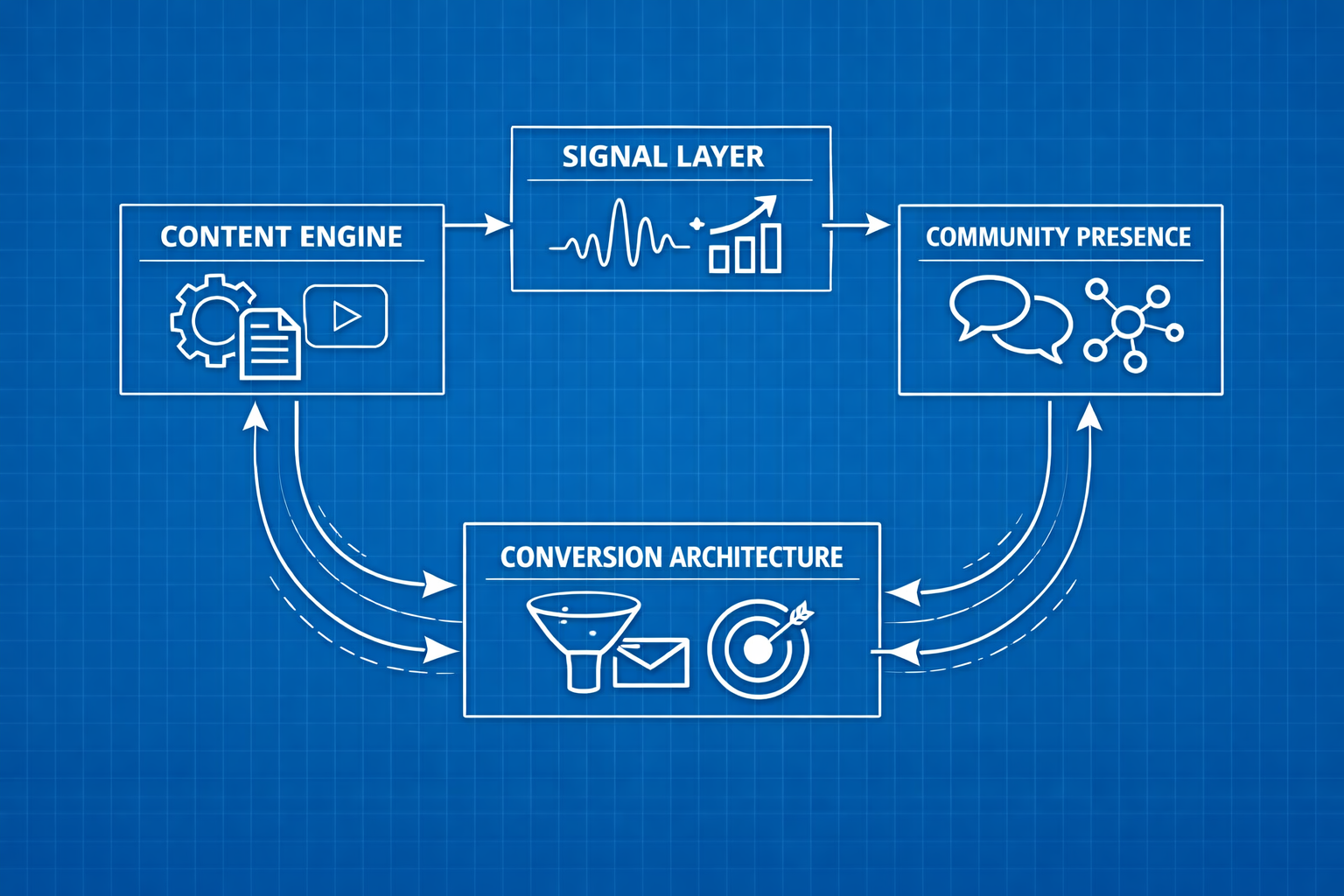
A Point-of-View Content Engine
Stop producing content because you have a content calendar. Start producing content because you have something to say.
Build a POV document — one or two pages that captures your company's specific take on the market, the problem, and the solution. This becomes the north star for everything you publish. Every piece of content should be traceable back to a core belief.
Then distribute that POV relentlessly: long-form articles, short-form social, podcast appearances, speaking slots, community contributions. The same idea, in many forms, in many places, over a long time.
A First-Party Data Strategy
As third-party cookies continue to fade and privacy regulations tighten, the brands with strong first-party data — data from direct relationships with their audience — will have an enormous structural advantage.
Build your email list. Build your community. Create reasons for buyers to identify themselves to you willingly. Every touchpoint should have a mechanism for capturing first-party data that you own and control.
An Integrated ABM Motion
Account-based marketing has been over-promised and under-delivered for years. But the underlying idea — focus your resources on the accounts most likely to buy, and coordinate your marketing and sales efforts around them — is more valid than ever.
The teams making ABM work aren't running it as a separate program. They're weaving it into every part of their go-to-market: the content, the outbound, the events, the sales plays. Integrated ABM isn't a campaign. It's an operating model.
A Revenue Feedback Loop
Here's the one most teams skip: close the loop from pipeline back to demand generation.
If you don't know which demand sources are generating the deals that actually close — at what velocity, at what deal size — you're allocating budget based on incomplete information. Build the reporting infrastructure that connects your demand generation activity to revenue outcomes, not just pipeline created.
The teams that can prove demand generation ROI accurately are the ones that keep their budgets when the CFO asks hard questions.
The Mindset Shift That Makes All of This Work
The old model of demand generation was about controlling the buyer's journey — moving them through a funnel you designed, at a pace you set, with information you curated.
The new model is about being present wherever buyers are, with the most relevant and valuable perspective available, at whatever point in their journey they happen to be.
You don't control the journey anymore. You influence it — by being genuinely useful, consistently visible, and undeniably credible.
That's a harder game. But it's the only one worth playing.
The Bottom Line
The future of demand generation belongs to teams that invest in substance over volume, signals over spray-and-pray, and community over campaigns. The tactics will keep changing. The fundamentals — know your buyer, earn their attention, give them reasons to choose you — never will.
Build for the fundamentals. Adapt the tactics. And stop waiting for the old playbook to start working again.