
I've built a lot of marketing scorecards, and I've learned the hard way that most of them fail for the same reason: they try to prove marketing is working instead of helping the reader understand what's actually happening in the business. A scorecard built to impress gets skimmed. A scorecard built to inform gets read.
Start with what the CEO actually decides based on this
Before building a single row, I ask what decisions this report should actually inform. Budget reallocation. Hiring. Whether to double down on a channel or cut it. If a metric doesn't connect to a decision someone in that room can actually make, it doesn't belong on the front page, no matter how good it looks.
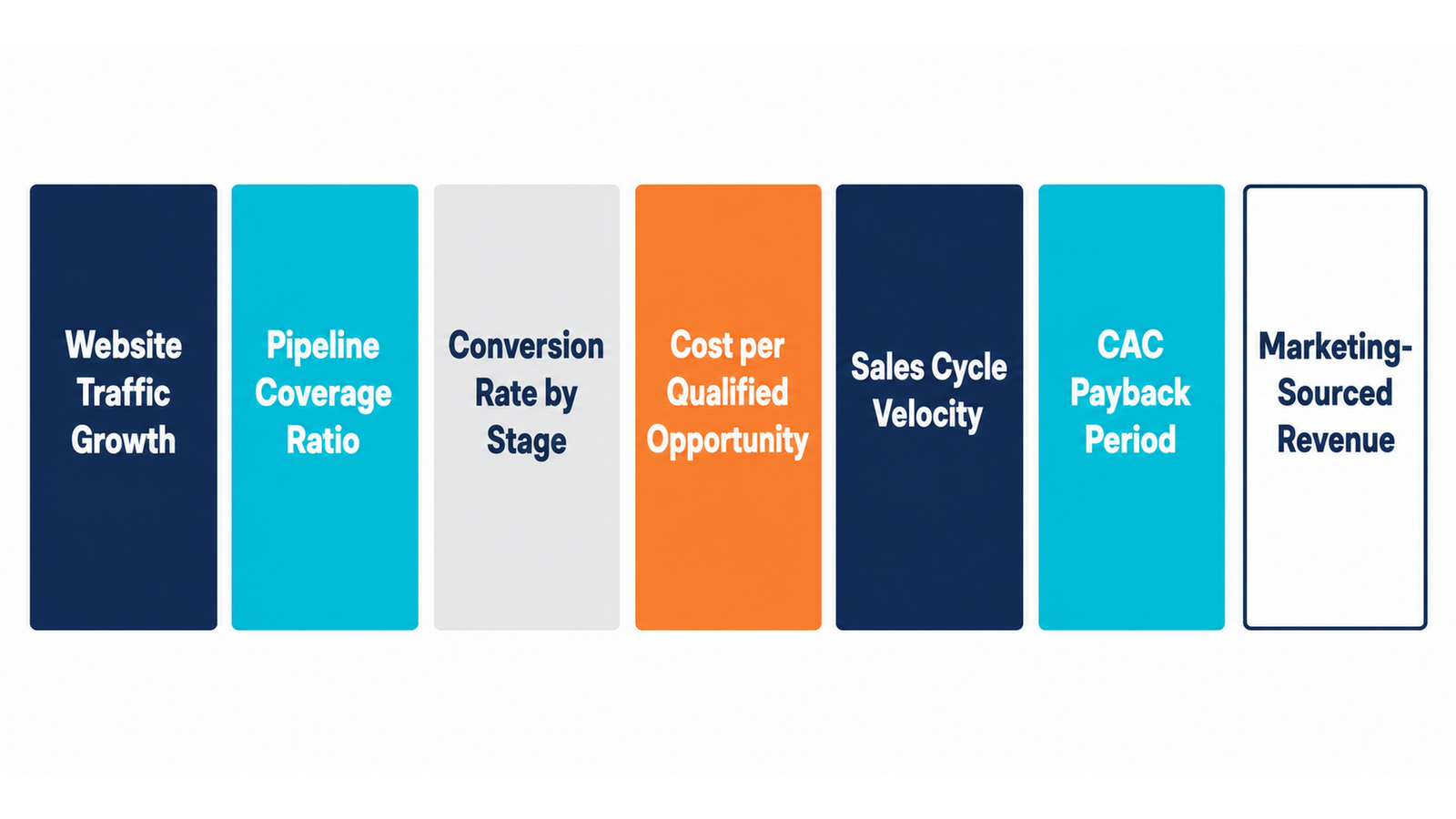
Seven metrics, not seventy
The scorecards that get read consistently share one trait: they're short. I limit the primary view to seven metrics or fewer, each with a clear trend line and a one-sentence explanation of what moved and why. Everything else lives in an appendix for anyone who wants to dig deeper, not on the page a busy executive opens on their phone between meetings.
Show trend, not just snapshot
A single number tells you almost nothing. The same number with three months of trend behind it tells you whether you're looking at a blip or a pattern. I never show a metric without at least a quarter of trend context, because that context is what actually drives a good decision instead of a reactive one.
Include the miss, with the plan
The single fastest way to build trust in a scorecard is to include a metric that's underperforming, alongside a clear explanation of why and what's being done about it. A report with nothing but green numbers reads as either lucky or dishonest. Neither builds confidence with a CEO who's seen enough reports to know real business rarely looks that clean.
One page, one story
I write a two or three sentence narrative at the top of every scorecard that tells the actual story of the month before a single number appears. Numbers without narrative get interpreted incorrectly as often as they get interpreted correctly. A short, honest narrative removes that ambiguity and respects the reader's time.
The test of a good scorecard
If a CEO can read your scorecard in five minutes and walk away knowing exactly what's working, what isn't, and what you're doing about it, you've built the right report. Everything beyond that is decoration, and decoration is usually what gets a scorecard skimmed instead of read.