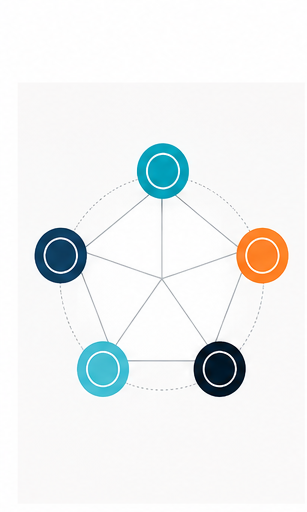
"Chief Marketing Officer" describes a title, not a way of working. Over 20 years, I've built a repeatable operating framework that I bring into every organization I lead, whether it's an enterprise software company, a manufacturing brand, or a fast-growing eCommerce business. It has five parts, and they work together, not in isolation.
1. Brand & Positioning
Before any campaign, channel, or tactic, I ask a blunt question: if a prospect had thirty seconds with your homepage, would they know exactly who you're for and why you're different? Most companies can't answer that clearly. I spend real time getting positioning right first, because every dollar spent on demand generation underperforms if the story underneath it is fuzzy.
2. Demand Generation & Pipeline
Once positioning is sharp, I build the engine that turns it into pipeline: SEO and organic content, paid programs, account-based marketing, email and nurture, and event strategy. I've grown organic search impressions by over 400% and lead generation by 170% in past roles by treating demand generation as a system with inputs and outputs, not a series of disconnected campaigns.
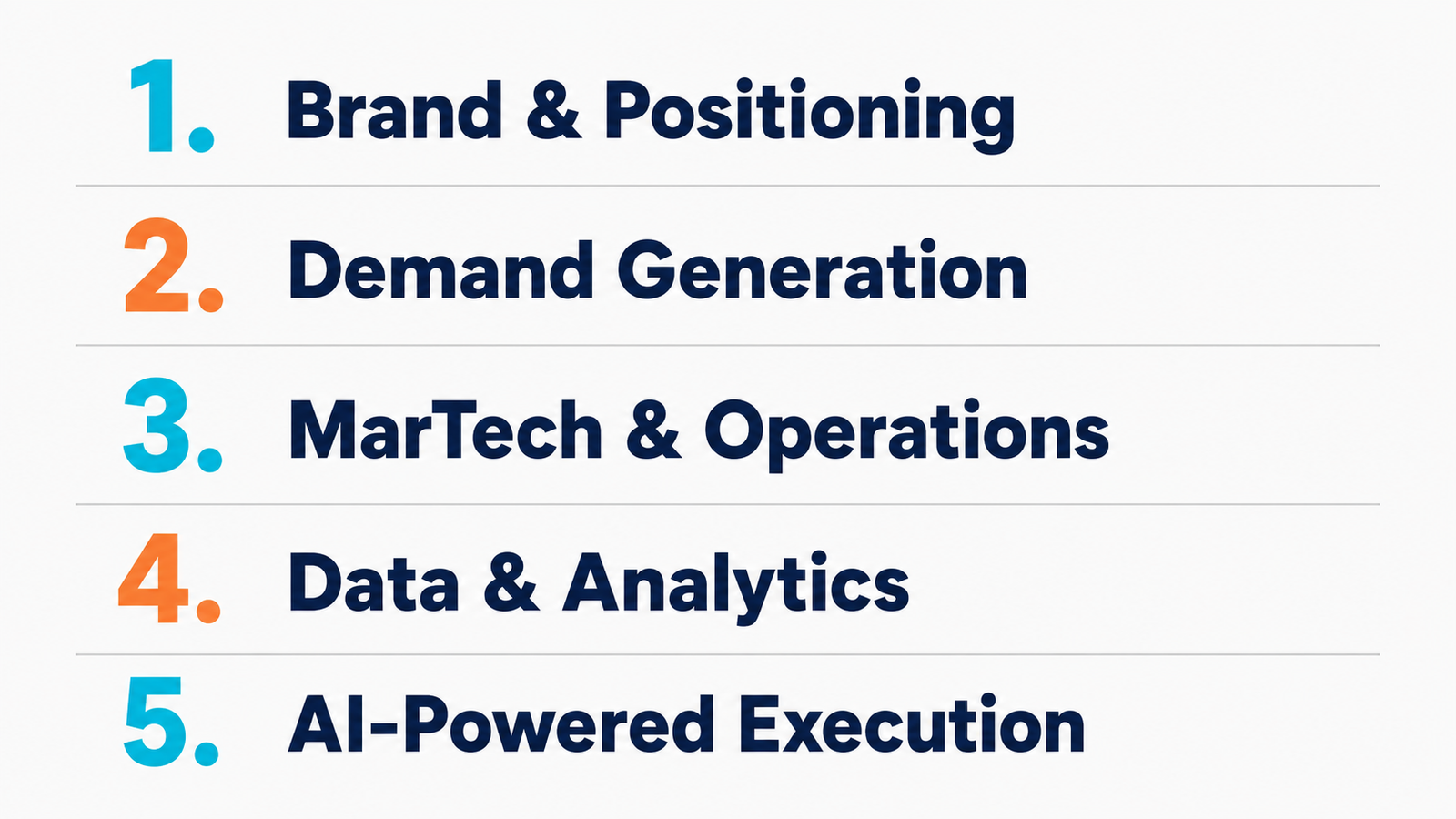
3. Marketing Technology & Operations
A marketing team is only as fast as its infrastructure. I've led multiple CMS and CRM migrations, including moving companies onto HubSpot, and I build the operational backbone (lead scoring, attribution, marketing resource management) that lets a team move quickly without losing visibility. See the full Technology page for the stack I run.
4. Data & Analytics
I don't believe in reporting for reporting's sake. I build scorecards that a CEO can read in five minutes and a marketing team can act on every week. That means picking the handful of metrics that actually predict revenue, not the fifty that are easiest to pull.
5. AI-Powered Execution
The newest layer, and the one I spend the most time thinking about now, is how AI changes both how marketing gets built and how buyers find companies in the first place. I sit on the University of Pittsburgh's CMO AI Roundtable, where I help shape governance standards for responsible AI adoption in marketing, and I actively use AI tools across content, research, and operations to move faster without sacrificing quality.
Why it works as a system
Any one of these five without the others falls apart. Great brand positioning with no demand engine behind it is a nice story nobody hears. A sophisticated MarTech stack with no data discipline is expensive noise. AI tools bolted onto a weak strategy just produce more content faster, not better results. The framework only works because every piece feeds the next one.
If you want to see how this plays out in practice, my Results & Track Record page has the numbers, and my Insights section has the thinking behind them.