
I write about AI visibility and generative engine optimization often enough that I owed it to myself to actually run the audit on my own site instead of only recommending it to others. The results were a useful reminder that knowing a framework and having applied it are two different things.
The scoring approach
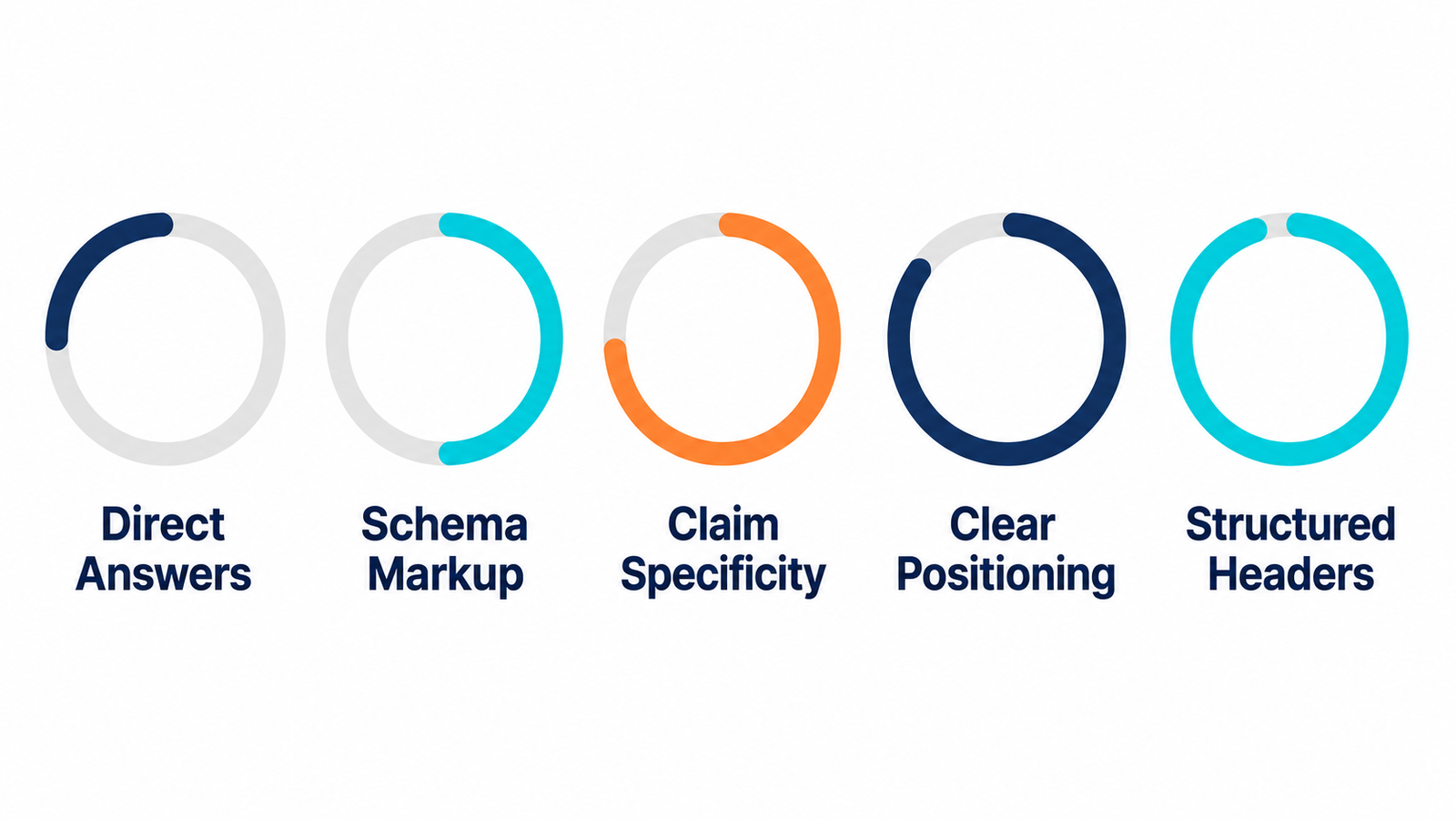
I evaluated the site against five criteria: whether key pages answer their core question in the first two sentences, whether structured data and schema markup exist, whether factual claims are specific enough for an AI model to extract cleanly, whether the site's positioning statement is unambiguous, and whether the content structure uses clear, question-matched headers.
What I found
The site scored reasonably well on traditional SEO fundamentals, page speed, basic metadata, and mobile responsiveness were all solid. AI readiness was a different story. Several key pages buried their actual point under two or three paragraphs of scene-setting before getting to the answer a reader, or an AI model, actually wanted. Schema markup was inconsistent across pages. And a few of my strongest professional claims, the kind that should be instantly citable, were phrased in a way that was true but not specific enough for a language model to summarize confidently.
The fix that mattered most
The single highest-leverage change was restructuring the opening of every key page to answer its core question immediately, then use the rest of the page to build the case. It felt almost too simple. It's also exactly what most content, including my own, tends to resist doing, because we're trained to build narrative tension before the payoff. AI models don't want narrative tension. They want the answer, fast and specific.
Testing it directly
After making the changes, I tested by asking several AI assistants direct questions a prospective employer or client might ask about my background and expertise. The improvement in accuracy and completeness of the answers was immediate and noticeable, which told me the changes weren't cosmetic, they actually changed how the content got parsed and cited.
Why every marketing leader should run this on their own site
It's easy to recommend an audit framework to clients or a company you're leading. It's a different, more honest exercise to run it on something you personally wrote and see where your own instincts, built over years of writing for search engines and human readers, don't automatically translate to how AI models read content. I'd recommend every marketing leader run this exercise on their own personal brand site before rolling it out anywhere else. You'll learn more from your own blind spots than from any client's.