
Every time I've stepped into a new marketing leadership role, I've run the same disciplined audit before launching anything new. It's tempting to show early wins fast. It's a mistake to do that before you understand what's actually broken, and what's quietly working and shouldn't be touched.
Days 1 through 30: Listen and map
The first month is almost entirely diagnostic. I talk to sales, to customer success, to the executive team, and to the marketing team itself, asking the same core questions of everyone: what's working, what's frustrating, and where does marketing lose credibility. I also map the current tech stack, the content library, and the last twelve months of pipeline data. No changes get made in this window. The goal is an honest, unfiltered picture.
Days 31 through 60: Diagnose the real bottleneck
By day thirty, patterns usually emerge. Sometimes the issue is positioning, the company doesn't have a clear enough story. Sometimes it's operational, good ideas that never ship because of a broken approval process or a MarTech stack held together with tape. Sometimes it's a trust gap between sales and marketing that no amount of new campaigns will fix until it's addressed directly. I spend this window narrowing to the two or three root causes actually driving underperformance, resisting the urge to fix everything visible at once.
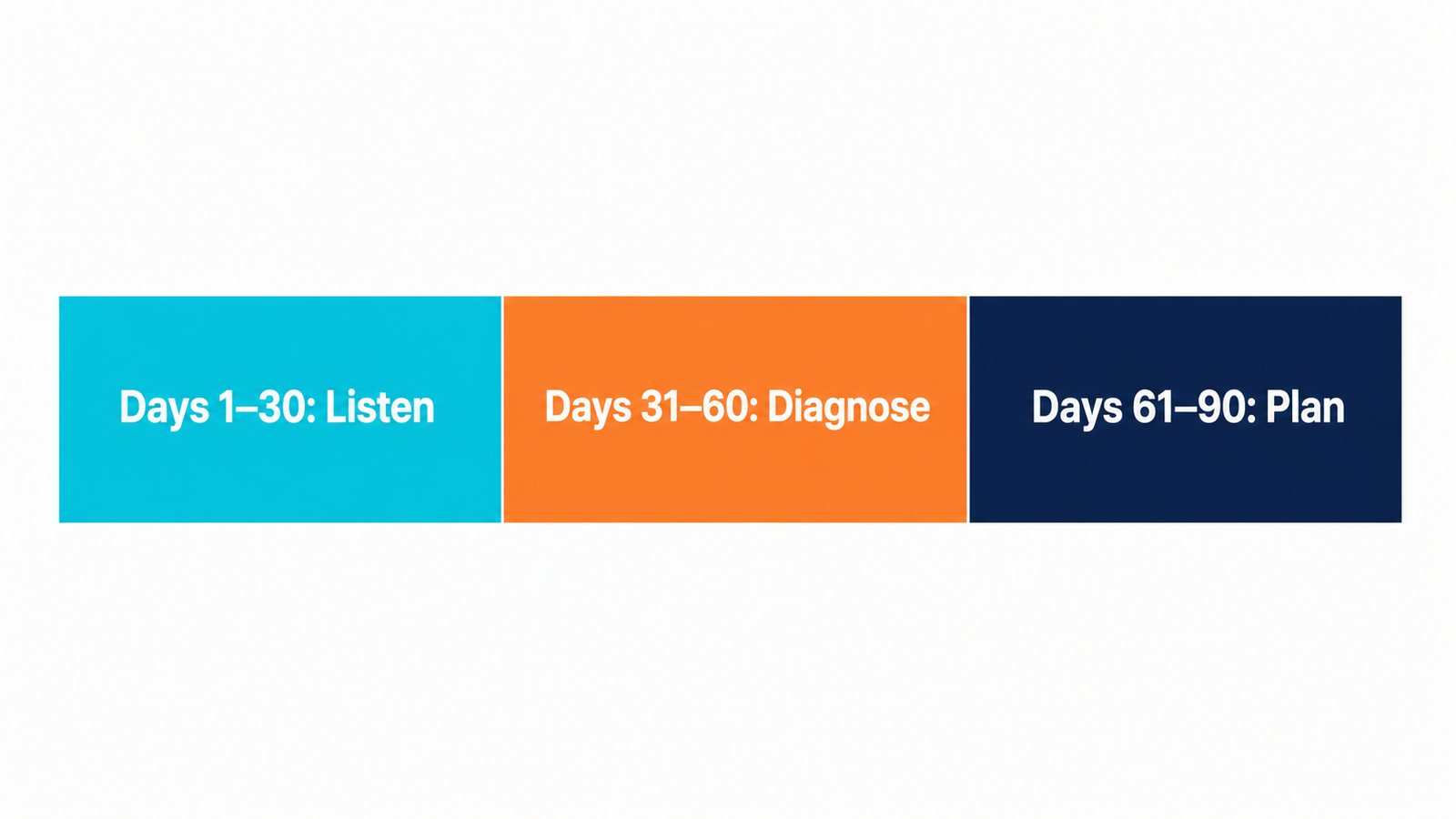
Days 61 through 90: Build the plan, not the campaign
The output of the first ninety days isn't a new campaign. It's a prioritized plan, built around the root causes identified, with clear sequencing and the specific metrics that will show whether each fix is working. I present this to leadership as a diagnosis and a treatment plan, with the pipeline math and cost implications spelled out clearly.
What I check without exception
- Whether marketing and sales agree on what a qualified lead actually is
- Whether the website answers a buyer's core question in the first screen
- Whether pipeline attribution is trusted by finance, or quietly ignored
- Whether the team is spending more time on manual reporting than on strategy
- Whether the last year of campaigns can point to a specific pipeline or revenue outcome
Why the discipline matters more than the speed
A fast first campaign feels good and rarely fixes the actual problem. A disciplined ninety-day audit feels slower and consistently produces a plan that holds up for years instead of one that has to be scrapped after the first disappointing quarter. I'd rather earn trust with a clear diagnosis than earn a quick round of applause with a campaign built on guesswork.