
I can build a dashboard as well as anyone. But there's a small set of numbers I keep in my head, not because I don't trust the dashboard, but because a CMO who has to look up basic pipeline math in front of the CEO has already lost some credibility in that room.
1. Pipeline coverage ratio
This is the ratio of open pipeline to quota, and most B2B organizations need something in the range of three to four times coverage to hit a number reliably, since not every opportunity closes. If I don't know this ratio for the current quarter without checking, I'm not actually running the function, I'm reporting on it after the fact.
2. Stage-to-stage conversion rates
Knowing your overall win rate is table stakes. Knowing where deals actually die, top of funnel, mid-funnel evaluation, or late-stage procurement, tells you where marketing's job isn't finished yet. I keep these conversion rates memorized because they change how I prioritize content and campaigns far more directly than a single blended conversion number ever could.
3. CAC payback period
How many months does it take for a new customer's revenue to cover what it cost to acquire them. This is the number that determines whether a growth strategy is actually sustainable or just borrowing against the future. I treat any material change in this number as a five-alarm signal worth investigating immediately, not something to notice at quarter's end.
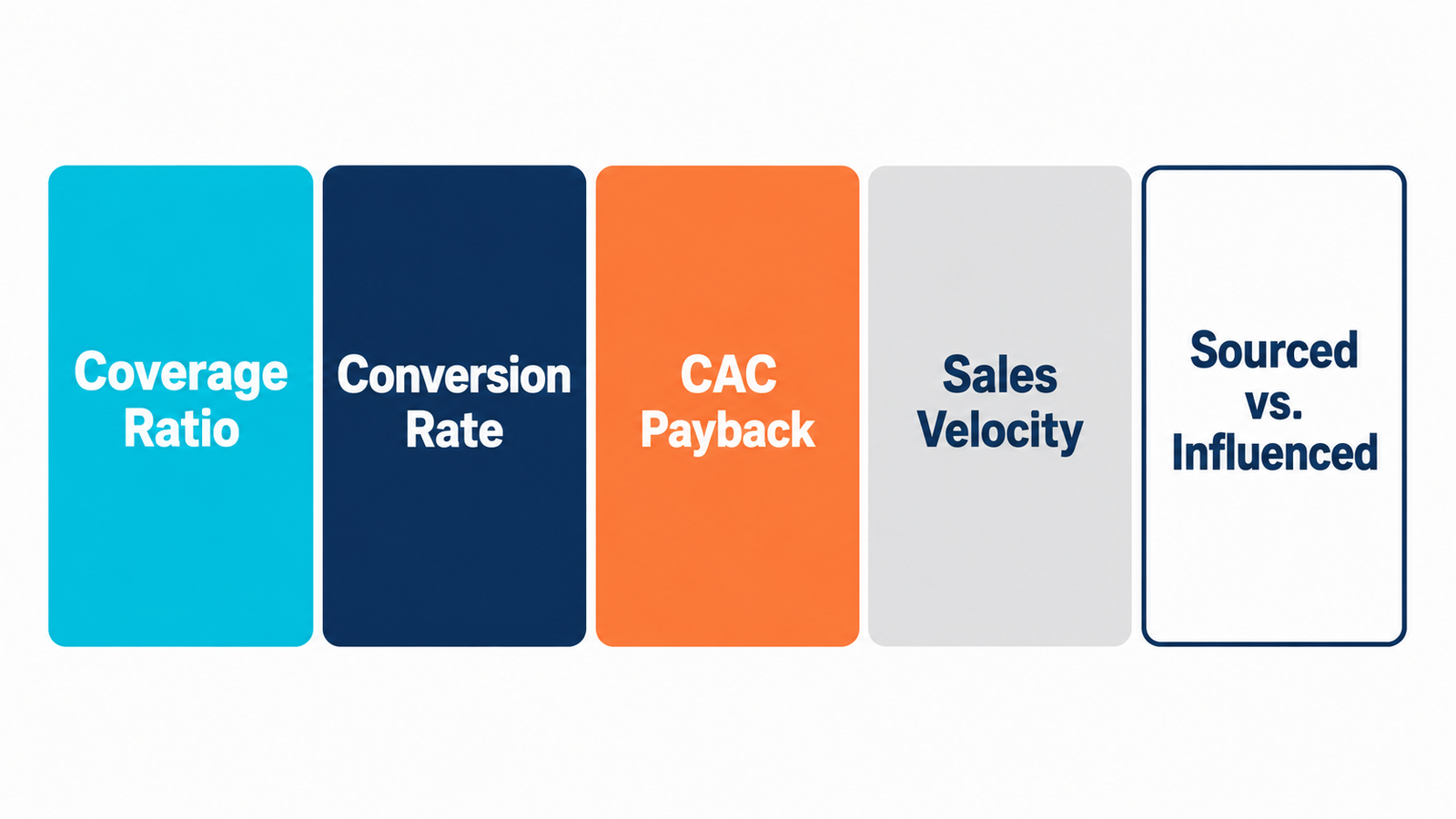
4. Sales cycle velocity
How long, on average, does it take an opportunity to move from creation to close. This number tells you whether your content and nurture strategy is actually accelerating decisions or just generating volume that sits in the pipeline. A shorter cycle with the same close rate is one of the clearest signals that marketing is doing its job well.
5. Marketing-sourced versus marketing-influenced revenue
The distinction matters because it tells two different stories. Sourced revenue proves marketing can originate deals on its own. Influenced revenue proves marketing accelerates and improves deals sales already found. Both numbers matter, and conflating them either overstates or understates what the function is actually contributing.
Why memorize these instead of just building a dashboard
A dashboard is a tool. Memorizing the core numbers is a discipline. When I know these five figures cold, I can have a real-time strategic conversation with a CEO or CFO instead of promising to follow up with a number later. That difference, being able to reason about the business live instead of after research, is what earns a marketing leader a genuine seat at the table instead of a standing invite to present slides.