
I've hired a lot of marketers over twenty years, across consumer brands, enterprise software, and eCommerce. The skill on the resume has never been the strongest predictor of whether someone would actually work out. What predicts it, consistently, is something harder to screen for: judgment.
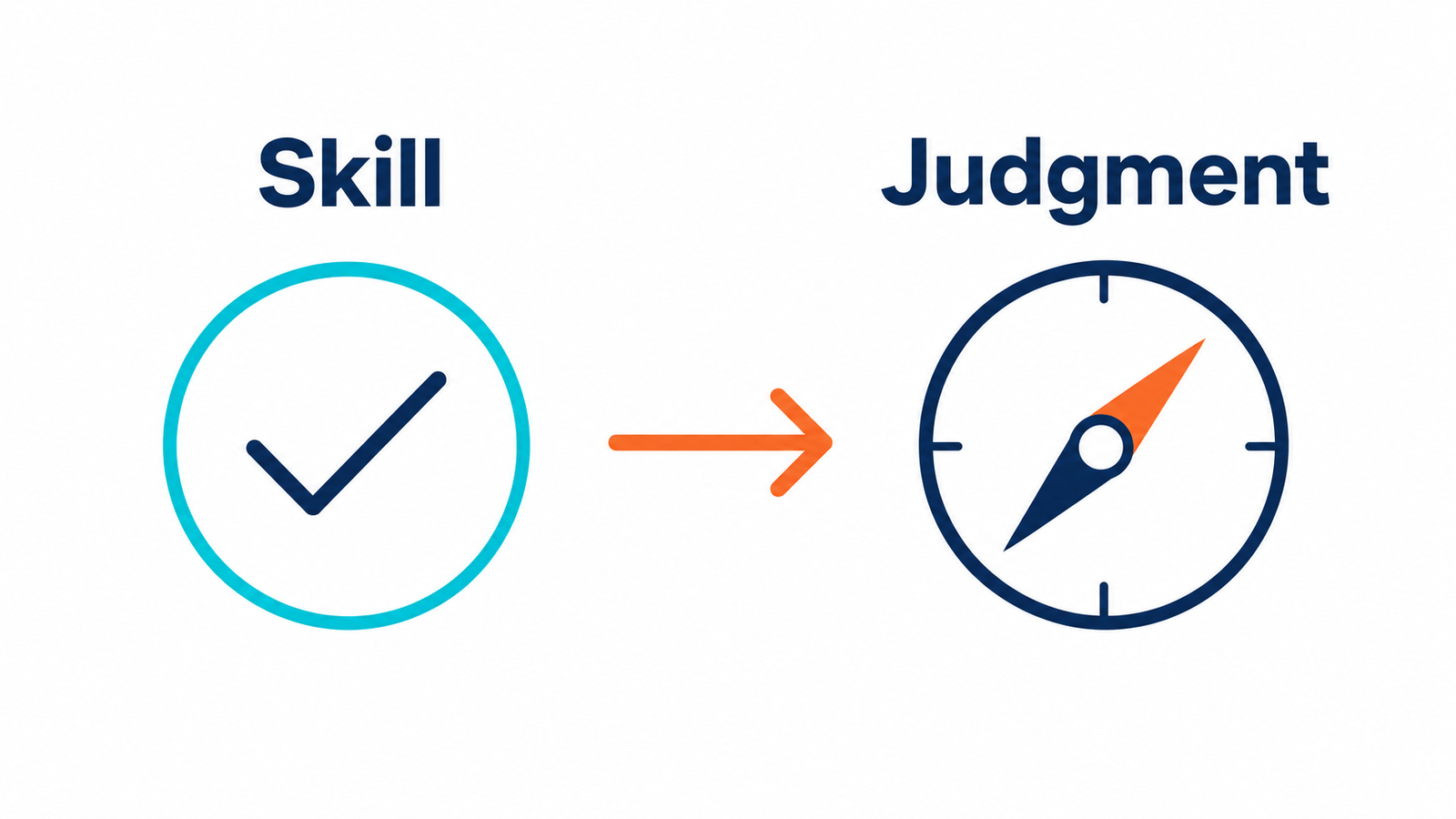
Skill gets you the interview. Judgment gets you the offer.
I still care about craft. I want to see someone who can write clearly, build a campaign that converts, or read a dashboard and draw a real conclusion from it. But craft is teachable and improvable on the job in a way that judgment often isn't. The candidates who've worked out best for me were the ones who could explain not just what they did on a past project, but why, including the tradeoffs they weighed and what they'd do differently.
The question I ask in almost every interview
I ask candidates to walk me through a decision they made where the data pointed one way and their gut pointed another, and what they actually did. The answer tells me more than any portfolio review. Someone who says they always trust the data is telling me they haven't built enough pattern recognition yet to know when the data is measuring the wrong thing. Someone who says they always trust their gut is telling me they'll fight my CFO in every budget meeting. I want the person who can tell me, specifically, how they navigate that tension, because that's the actual job.
Ownership over polish
I'd rather hire someone who owns a rough result and explains what they learned than someone who presents a polished result and can't explain the parts that didn't work. Leading from behind means I'm trusting this person with real decisions when I'm not in the room. I need to know they'll tell me the truth about what happened, not the version that makes them look best.
Red flags I've learned to take seriously
- Every past result is described as unambiguously successful, with no mention of what they'd change
- Credit is described entirely in the first person, even for team-driven wins
- No curiosity about how their work connected to revenue, only to output
Why this matters more as teams get leaner
The leaner the team, the more each hire has to operate with real autonomy, because there's no layer of management to catch every mistake before it ships. That's exactly the environment I try to build, small, high-trust, high-output teams, which means the judgment question isn't a nice-to-have in hiring. It's the whole ballgame.